
Introduction
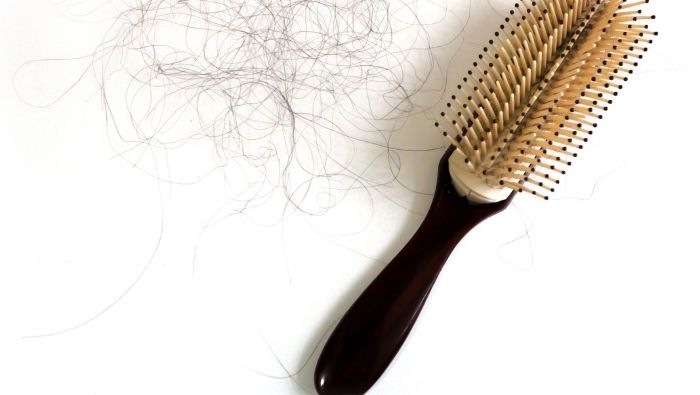
Hair loss is one of the most distressing symptoms a woman with PCOS can experience - and one of the least adequately addressed in standard care.
If you've noticed your hair thinning at the crown, your parting widening, more hair than usual on your pillow or in the shower drain, or a general loss of the density your hair once had - and you've been told there's not much to be done beyond minoxidil or waiting - this article is for you.
PCOS-related hair loss is not simply genetic bad luck. It is driven by a specific hormonal and metabolic mechanism that is, to a meaningful degree, modifiable. Not reversible overnight, and not without consistent effort - but genuinely responsive to the right approach.
Understanding why it is happening is the essential starting point.
The Mechanism: Why PCOS Causes Hair Loss
PCOS-related hair loss is a form of androgenic alopecia - hair loss driven by androgen activity at the hair follicle. The same hormonal pathway responsible for acne in PCOS operates here, but with a different target tissue and a cruelly opposite effect: where androgens overstimulate sebaceous glands to produce excess sebum, they progressively shrink hair follicles on the scalp.
The primary androgen involved is DHT - dihydrotestosterone - a potent derivative of testosterone converted by an enzyme called 5-alpha reductase. DHT binds to androgen receptors in scalp hair follicles and, over time, causes a process called follicular miniaturisation: the follicle gradually becomes smaller, producing progressively finer and shorter hairs until, in advanced cases, it stops producing visible hair altogether.
The critical point for women with PCOS is that this process is not purely determined by how much testosterone you have in total. It is driven by free testosterone - the biologically active portion that is not bound and neutralised by sex hormone-binding globulin (SHBG). And as covered in High Insulin and PCOS: Why It Disrupts Hormones, chronically elevated insulin both increases ovarian testosterone production and suppresses SHBG simultaneously - maximising the amount of free androgen reaching receptors throughout the body, including in the scalp.
This is why hair loss in PCOS is fundamentally a metabolic story, not just a hormonal one.
Insight
Two women can have similar testosterone levels on a blood test, but very different experiences of hair loss - depending on how much of that testosterone is free versus bound, how sensitive their individual follicles are to DHT, and what their inflammatory environment looks like. This is why total testosterone alone is not sufficient as a marker, and why addressing the metabolic drivers rather than just the hormone level is the most complete approach.
The Pattern of PCOS Hair Loss
PCOS-related hair loss has a recognisable pattern that differs from the diffuse shedding of telogen effluvium (stress or nutritional hair loss) and from the patchy loss of alopecia areata.
Where it tends to occur: Androgenic alopecia in women typically presents as diffuse thinning across the crown and top of the scalp, with a widening of the central parting. The frontal hairline is often preserved - unlike the receding hairline pattern more common in men - though temples can also be affected.
How it progresses: The process is gradual. Most women notice changes over months to years rather than rapid shedding events. This gradual onset is one reason it is often dismissed or minimised in clinical settings - it rarely looks dramatic on any given day, but the cumulative change over two or three years can be significant.
Associated features: PCOS hair loss frequently occurs alongside other androgenic symptoms - acne, excess facial or body hair, irregular cycles, and central weight gain. Its presence alongside these features strengthens the case for androgenic alopecia as the underlying mechanism.
Why Nutrients Matter More Than You Think
Even when androgens are the primary driver, nutritional status significantly modulates how aggressively hair loss progresses. Several nutrients have direct and well-evidenced roles in hair follicle function - and deficiencies in these are extremely common in women with PCOS.
Ferritin (stored iron) is the nutrient most consistently associated with hair loss in women. Hair follicles are among the most metabolically active cells in the body and are highly sensitive to iron availability. A ferritin level that is technically within the normal laboratory range may still be insufficient for optimal hair follicle function.
Women with PCOS are at elevated risk of low ferritin due to heavy or irregular periods causing blood loss, and due to the chronic inflammation that impairs iron absorption and utilisation. If you have not had ferritin specifically tested - not just haemoglobin or standard iron - it is worth requesting.
Zinc is required for 5-alpha reductase regulation and hair follicle cell proliferation. Deficiency directly impairs hair growth and is associated with increased androgenic alopecia severity. Zinc deficiency is common in insulin-resistant individuals due to increased urinary zinc excretion.
Vitamin D has receptors in hair follicles and plays a direct role in the hair growth cycle. Deficiency - which, as noted in PCOS and Inflammation, affects over 70% of women with PCOS in some studies - is independently associated with hair thinning and slowed regrowth.
Protein and amino acids - hair is almost entirely composed of keratin, a structural protein. Inadequate dietary protein directly compromises the building blocks required for hair shaft production. Women with PCOS who are restricting calories often under-eat protein, compounding this effect.
Before spending money on hair supplements, get a targeted blood panel: ferritin, vitamin D, zinc, full blood count, and fasting insulin. These results tell you where the genuine nutritional gaps are, so supplementation is targeted rather than guesswork. For the most meaningful interpretation, it’s best to work with a qualified clinician who understands functional nutritional ranges - not just standard laboratory reference ranges.
The Role of Inflammation and Cortisol
Androgenic activity at the follicle is not the only driver of hair loss in PCOS. Chronic inflammation and cortisol dysregulation contribute independently - and addressing them is part of a complete approach.
Inflammation and the follicle: Inflammatory cytokines - the same ones elevated in PCOS and detailed in PCOS and Inflammation - create a pro-inflammatory microenvironment around the hair follicle that directly impairs the growth phase of the hair cycle and accelerates the regression phase. Scalp inflammation also activates local 5-alpha reductase activity, increasing DHT conversion at the follicle site itself.
Cortisol and the hair cycle: Chronic cortisol elevation pushes hair follicles prematurely out of the growth phase (anagen) into the resting and shedding phase (telogen) - a process called telogen effluvium. This tends to produce more diffuse shedding across the whole scalp rather than the patterned thinning of androgenic alopecia. In PCOS, both mechanisms are often operating simultaneously - meaning women may be experiencing both pattern thinning and increased shedding at the same time.
Significant hair shedding events - where large amounts come out in the shower or on the brush over weeks or months - often follow periods of high physiological or psychological stress, illness, severe dietary restriction, or significant weight loss. This is the cortisol and telogen effluvium mechanism operating acutely on top of the slower androgenic background process.
For the full picture of cortisol in PCOS: Cortisol and PCOS: The Stress–Blood Sugar Connection
What Actually Helps: A Root-Cause Approach
Addressing PCOS hair loss meaningfully requires working across the hormonal, metabolic, nutritional, and inflammatory drivers simultaneously. There is no single intervention that achieves this - but the combined effect of the following, applied consistently, is clinically meaningful.
1. Address Insulin Resistance Directly
Because elevated insulin is the primary driver of both excess androgen production and SHBG suppression in PCOS, improving insulin sensitivity is the most upstream intervention available for androgenic hair loss.
As insulin levels fall, SHBG gradually rises, more testosterone is bound and neutralised, and the free androgen load reaching the scalp follicles reduces. This process takes months, not weeks - but it addresses the condition at its hormonal source rather than downstream.
The dietary approach most directly relevant: Best Diet for PCOS and Insulin Resistance and How to Balance Blood Sugar with PCOS
2. Correct Nutritional Deficiencies
Testing and addressing ferritin, vitamin D, and zinc specifically - to functional rather than just laboratory reference ranges - removes the nutritional brake on hair follicle recovery. Without adequate ferritin in particular, even a well-managed androgenic picture may not translate into visible regrowth.
3. Reduce Inflammatory Load
An anti-inflammatory dietary pattern - prioritising omega-3 fatty acids, antioxidant-rich plant foods, and a low-glycaemic base - reduces the scalp's inflammatory microenvironment and the systemic inflammatory signalling that amplifies androgenic alopecia. Every strategy that reduces PCOS-related inflammation has a downstream benefit for hair follicle health.
4. Manage Cortisol and Support Sleep
Given that cortisol directly pushes follicles into the shedding phase, cortisol management is a hair loss intervention in the most literal sense. Consistent sleep, appropriately dosed exercise, and structured stress reduction practices reduce the telogen effluvium component that compounds androgenic loss in PCOS.
Full protocols: PCOS and Sleep and Cortisol and PCOS
5. Targeted Supplementation
Beyond correcting specific deficiencies, the following have evidence for supporting hair health in the context of androgenic alopecia:
Inositol - particularly the myo-inositol and D-chiro-inositol combination - improves insulin sensitivity in PCOS and has downstream evidence for reducing free androgen levels and improving androgenic symptoms including hair loss.¹
Saw palmetto - a plant-derived 5-alpha reductase inhibitor that reduces DHT conversion at the follicle level. Clinical evidence in androgenic alopecia is modest but emerging, and it is widely used in integrative practice for this purpose.²
Spearmint tea - two cups daily has clinical evidence for reducing free testosterone in PCOS, with a corresponding effect on androgenic symptoms.³ A low-effort, low-cost addition with a reasonable evidence base.
NAC (N-acetyl cysteine) - as covered in the inflammation article, NAC improves insulin sensitivity and reduces androgen levels in PCOS, with beneficial downstream effects on androgenic symptoms.
Always confirm supplementation with a qualified clinician, particularly alongside existing PCOS management.
6. Topical Interventions
There are medications available for androgenic hair loss, such as topical treatments that can support regrowth by prolonging the hair growth phase and improving follicular blood supply. However, these do not address the underlying hormonal or metabolic drivers.
As I do not prescribe or manage medications, it’s important to discuss these options with your GP or specialist to understand their suitability, expected outcomes, and potential side effects.
If you begin a metabolic and nutritional approach to PCOS hair loss, photograph your parting and crown in consistent lighting every four weeks. Day-to-day observation in a mirror makes it almost impossible to perceive gradual improvement - and women frequently abandon approaches that are working because they cannot see progress. A monthly photograph series over six months gives you an objective comparison that moment-to-moment observation cannot.
Insight
Androgenic alopecia in PCOS is mechanistically well-understood - driven by elevated free testosterone, increased DHT conversion, and follicular miniaturisation amplified by chronic inflammation and nutritional deficiencies that are highly prevalent in this population. The evidence for insulin sensitisation as a meaningful upstream intervention is consistent: reducing hyperinsulinaemia raises SHBG, reduces free androgen availability, and modifies the hormonal environment in which follicular miniaturisation progresses. This is not an alternative approach - it is the physiologically appropriate first response to hormonally driven hair loss in women with PCOS, best combined with targeted nutritional correction and, where appropriate, evidence-based topical management.
The Bottom Line
PCOS-related hair loss is driven by elevated free androgens, insulin resistance, chronic inflammation, nutritional depletion, and cortisol dysregulation - often all operating simultaneously. That is why it is resistant to single-intervention approaches, and why topical treatments alone rarely produce lasting results.
The most effective approach works upstream and across multiple levels: improving insulin sensitivity to reduce the androgenic drive, correcting nutritional gaps that are limiting follicle function, reducing inflammatory load, and managing cortisol to minimise the shedding component.
Progress is slow - the hair growth cycle operates over months, and meaningful regrowth or stabilisation typically requires four to six months of consistent effort before it becomes clearly visible. But the approach is working on the right problem, at the right level.
Your hair loss is not inevitable. It is a symptom of a metabolic environment that can be shifted - and when it shifts, the follicle responds.
Ready to Address the Root Cause?
In my clinic, I work with women to address the insulin resistance, inflammatory load, and hormonal dysregulation that drive PCOS symptoms - including hair loss that has not responded to surface-level treatment.
Our programs like Metabolic Balance®, uses your individual blood chemistry to design a personalised nutrition protocol that recalibrates insulin sensitivity and reduces the androgen-driving hormonal environment from the inside.
Women working through Metabolic Balance commonly report improvements in androgenic symptoms - including hair and skin changes - as the metabolic environment shifts over the course of the programme.
In-clinic and remote consultations available.
Free Resource - Start Here
The 7-Day Metabolic Reset is a free, structured guide for women with PCOS and insulin resistance - covering blood sugar stabilisation, anti-inflammatory nutrition, and cortisol support in a clear, practical seven-day framework.
👉 Download the 7-Day Metabolic Reset
References
- Pkhaladze L, et al. (2015). Inositols and the PCOS patient. ISRN Obstetrics and Gynecology, 349(2), 1–8.
- Rossi A, et al. (2012). Comparative effectiveness of finasteride vs. saw palmetto in androgenetic alopecia. International Journal of Immunopathology and Pharmacology, 25(4), 1167–1173.
- Grant P. (2010). Spearmint herbal tea has significant anti-androgen effects in polycystic ovarian syndrome. Phytotherapy Research, 24(2), 186–188.
- Rushton DH. (2002). Nutritional factors and hair loss. Clinical and Experimental Dermatology, 27(5), 396–404.