
Introduction
If your body simply feels different in your 40s than it did a decade ago - achier, more reactive, slower to recover, more inflamed in ways you cannot quite articulate - there is a specific clinical reason, and it is one that almost no one talks about openly.
Chronic low-grade inflammation rises significantly in perimenopause. It happens quietly, without fever or visible swelling, but its effects accumulate across every system in the body - driving joint pain, worsening hot flushes, amplifying insulin resistance, contributing to brain fog and mood changes, accelerating skin and tissue ageing, and underlying so much of the symptom burden that women experience in this transition.
Most women have never been told this. They are told their joints are stiffer because of age. Their weight is harder to manage because of metabolism. Their energy is lower because of hormones. Their cognition is foggier because of stress.
All of these have inflammation as a common thread.
The good news - and the focus of this article - is that inflammation is one of the most responsive aspects of the perimenopausal picture to address. The right nutritional approach can produce changes that are genuinely measurable, often within weeks. The women we work with clinically routinely see this - reduced joint pain, calmer skin, improved energy, better sleep, more stable mood, and significantly reduced inflammatory markers on retesting - through targeted dietary intervention that addresses the underlying inflammatory environment rather than managing individual symptoms.
This article explains what is actually happening, why nutrition is the most powerful single lever you have, and what genuinely shifts the picture.
Why Perimenopause Drives Inflammation
The connection between perimenopause and chronic inflammation is not a vague wellness concept. It is a well-documented physiological reality with specific mechanisms.
Oestrogen's Anti-Inflammatory Role
Throughout your reproductive years, oestrogen has been quietly providing one of the body's most important anti-inflammatory signals. It suppresses the production of inflammatory cytokines, supports the resolution of inflammatory responses once they have done their job, maintains the integrity of tissue barriers (skin, gut, vascular), and modulates immune function across the body.
As oestrogen declines in perimenopause, this anti-inflammatory protection is progressively withdrawn. Inflammatory cytokines - particularly IL-6, TNF-α, and CRP - rise measurably across the menopausal transition, often becoming chronically elevated as the transition progresses.¹
This is not a small change. The shift toward a more inflammatory environment is one of the most significant physiological transitions of perimenopause - and its consequences extend across virtually every system in the body.
Visceral Fat Accumulation
As covered in Perimenopause and Weight Gain, the metabolic changes of perimenopause shift fat distribution toward the abdomen and visceral depots. Visceral fat is not passive storage tissue - it is metabolically active, hormonally active, and inflammatory. Visceral adipocytes (fat cells) continuously release inflammatory chemicals into circulation.
The more visceral fat accumulates, the higher the inflammatory output - creating a self-reinforcing loop where the metabolic changes of perimenopause produce visceral fat, which produces inflammation, which worsens insulin resistance, which drives more visceral fat accumulation.
Breaking this loop is one of the most metabolically significant achievements available through intervention in this transition.
Insulin Resistance and Inflammation
Insulin resistance and chronic inflammation are deeply interconnected - each drives the other in ways that compound the perimenopausal picture.
Chronically elevated insulin directly stimulates inflammatory cytokine production. Inflammatory cytokines, in turn, directly impair insulin receptor signalling - making insulin resistance worse. As insulin resistance worsens in perimenopause (driven by declining oestrogen and reduced muscle mass), this inflammatory feedback loop accelerates.
Perimenopause and Insulin Resistance covers this mechanism in detail.
Gut Microbiome Changes
The gut microbiome shifts measurably through perimenopause - partly because of declining oestrogen affecting the bacteria that metabolise hormones, partly because of cortisol changes affecting gut barrier function, and partly because of the dietary patterns that often emerge in this decade.
A disrupted gut microbiome contributes to systemic inflammation through increased intestinal permeability - allowing bacterial fragments to enter circulation and trigger an immune response. This is one of the most under-recognised drivers of chronic inflammation in perimenopause, and addressing it is one of the highest-leverage nutritional interventions available.
Cortisol and Sleep Disruption
Elevated cortisol - which becomes more reactive in perimenopause as oestrogen's HPA axis buffering is withdrawn - directly stimulates inflammatory signalling. Poor sleep, which is highly prevalent in this transition, independently elevates inflammatory markers and impairs the overnight processes that resolve daily inflammatory activity.
The combination of cortisol dysregulation and sleep disruption in perimenopause creates an environment in which inflammation accumulates faster than the body can resolve it.
INSIGHT Chronic inflammation in perimenopause is not a side effect of the transition. It is a defining feature - driven by the withdrawal of oestrogen's anti-inflammatory effects, compounded by visceral fat accumulation, worsening insulin resistance, gut microbiome shifts, cortisol changes, and sleep disruption. This means that addressing inflammation is not a peripheral concern. It is central to managing the perimenopausal experience well.
What Chronic Inflammation Does in Perimenopause
The consequences of rising inflammation in perimenopause extend across virtually every symptom women experience. Understanding the inflammatory thread helps explain why so many seemingly separate symptoms respond to the same interventions.
Joint pain and stiffness. Inflammatory chemicals act directly on joint tissue, producing the aching, stiffness, and pain that many women notice in their 40s for the first time. Morning stiffness, new aches in hands and knees, joints that feel inflamed without injury - these are inflammatory presentations, and they respond to anti-inflammatory intervention.
Worsened hot flushes and night sweats. Vasomotor symptom severity is measurably amplified by inflammatory load. Women with higher inflammatory markers experience more frequent and more severe hot flushes. This means reducing inflammation directly reduces vasomotor symptom burden - a connection rarely made in mainstream advice.
Brain fog and cognitive symptoms. Inflammatory cytokines cross the blood-brain barrier and impair prefrontal cortex function, contributing to the cognitive changes covered in Perimenopause and Brain Fog. Reducing inflammatory load is directly relevant to cognitive symptoms.
Mood changes and anxiety. Neuroinflammation increases amygdala reactivity and impairs emotional regulation, contributing to the mood and anxiety changes that affect so many women in this transition.
Worsening insulin resistance. Inflammation directly impairs insulin receptor signalling - meaning that an inflamed body is also a more insulin-resistant body, with all the downstream metabolic consequences this drives.
Skin changes. Inflammation accelerates collagen breakdown, slows skin repair, and contributes to the textural changes and reduced elasticity women notice in their 40s.
Digestive symptoms. Bloating, food sensitivities, irregular bowel habits - many of these are inflammatory presentations linked to gut barrier disruption and microbiome shifts.
Persistent fatigue. The body's response to chronic inflammation includes the activation of fatigue-inducing immune signalling - producing the exhausted, sluggish feeling that does not lift with adequate sleep.
Accelerated cardiovascular and metabolic risk. This is the long-term consequence that warrants particular attention. Chronic inflammation is a primary mechanism behind the rise in cardiovascular disease in post-menopausal women. The inflammatory work done in perimenopause is not just about feeling better now - it shapes long-term health outcomes meaningfully.
Why Nutrition Is the Most Powerful Lever You Have
This is where the perimenopausal inflammation picture becomes genuinely hopeful - and where the focus of this article shifts decisively to the intervention with the strongest evidence base and the most reliable results.
Among all the levers available for reducing chronic inflammation, nutrition is by far the most powerful. Not because supplements do not have a role, not because sleep and stress and movement are not important - but because food is the most consistent, most volume-significant, and most physiologically central input the body receives every day.
You eat three to five times a day, every day, for the rest of your life. Every one of those meals is either contributing to inflammation or contributing to its resolution. There is no other lever that operates with that frequency and that consistency.
In clinical practice, this is the area where we see some of the most dramatic transformations. Women come in with elevated inflammatory markers, joint pain, hot flushes, weight that will not shift, brain fog, and digestive symptoms. Within weeks of a properly structured, personalised nutritional approach, the markers begin to fall. The joint pain eases. The hot flushes reduce. The energy returns. The cognitive clarity comes back.
This is not anecdote. It is the consistent clinical outcome of addressing inflammation through targeted, individualised nutrition.
Insight
The women who get the most out of perimenopause are the women who treat nutrition as a clinical intervention, not a wellness habit. The same food that nourishes you also signals to your immune system, your hormonal system, your gut microbiome, and your inflammatory pathways. Every meal is doing this work - for or against your perimenopausal health. The question is not whether nutrition matters. It is how precisely you are calibrating it to your individual physiology.
The Nutritional Foundations That Reduce Inflammation
There is a coherent dietary framework that produces measurable reductions in inflammation across virtually every population that has been studied - and the perimenopausal evidence aligns closely with the broader picture.
Build Every Meal to Stabilise Blood Sugar
Each blood sugar spike - particularly when carbohydrates are eaten alone or in large amounts - triggers a transient inflammatory response. Repeated through the day, these spikes contribute meaningfully to the chronic inflammatory load.
Stabilising blood sugar is therefore not just about insulin and weight. It is a direct anti-inflammatory intervention. The structural rules - protein and healthy fat at every meal, never carbohydrates alone, lower-glycaemic carbohydrate sources, regular meal timing - that are covered throughout this site are anti-inflammatory work as much as they are metabolic work.
The Best Diet for Perimenopause and Metabolic Health covers the full framework.
Prioritise Omega-3 Fatty Acids
Omega-3 fats are among the most well-evidenced anti-inflammatory nutrients available. They directly compete with arachidonic acid for the inflammatory enzyme pathways, resolve inflammatory signalling through specialised compounds called resolvins and protectins, and reduce NF-κB activation - the master switch for inflammatory gene expression.
The practical sources:
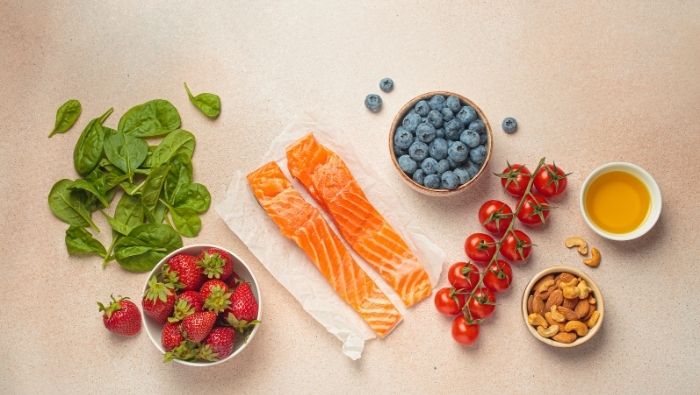
- Oily fish two to three times per week - salmon, sardines, mackerel, anchovies, herring. This is the most concentrated and bioavailable source.
- Walnuts, flaxseed, chia seeds daily - plant sources providing ALA, which converts (less efficiently) to the active forms EPA and DHA.
- Supplementation - for women whose oily fish intake is limited, a quality omega-3 supplement providing combined EPA and DHA produces measurable anti-inflammatory effects.
Eat for Antioxidant Diversity
Oxidative stress and inflammation are inseparable - each drives the other. Reducing oxidative load through dietary antioxidants directly reduces the inflammatory cascade.
The evidence supports overall dietary diversity rather than any single "superfood":
- Berries - blueberries, strawberries, raspberries - rich in polyphenols with specific anti-inflammatory effects
- Dark leafy greens - spinach, kale, rocket, chard
- Cruciferous vegetables - broccoli, cauliflower, Brussels sprouts, kale - provide sulforaphane, which activates the body's master antioxidant defence system
- Extra-virgin olive oil - the polyphenols in EVOO have effects comparable to ibuprofen at a molecular level (though not at clinical doses)
- Herbs and spices - turmeric, ginger, rosemary, oregano, garlic - concentrated sources of anti-inflammatory compounds
- Green tea - provides EGCG with consistent anti-inflammatory evidence
Aim for thirty different plant foods per week. The diversity matters more than the quantity of any single one.
Support the Gut Microbiome
Because gut dysbiosis is a direct driver of systemic inflammation through the leaky gut pathway, supporting microbiome health is genuinely anti-inflammatory work - not just digestive comfort.
The practical approach:
- Fermented foods regularly - natural yoghurt with live cultures, kefir, kimchi, sauerkraut, miso. Live bacterial diversity directly supports microbiome diversity.
- Plenty of fibre, particularly soluble fibre - oats, legumes, vegetables, fruits. Fibre is the substrate for short-chain fatty acid production by beneficial bacteria, and SCFAs are directly anti-inflammatory.
- Plant diversity - the same target of thirty different plants per week supports microbiome diversity, which is one of the strongest predictors of metabolic and inflammatory resilience.
- Reducing ultra-processed foods - the strongest single dietary risk factor for unfavourable microbiome changes.
Reduce the Strongest Inflammatory Inputs
Some dietary patterns are reliably pro-inflammatory and worth reducing meaningfully - not because they need to be eliminated entirely, but because their cumulative inflammatory impact in perimenopause is significant.
Ultra-processed foods - the strongest single dietary pro-inflammatory factor across the research literature. Defined by industrial formulations with ingredients you would not find in a home kitchen. Reducing this category produces measurable inflammatory improvements within weeks.
Refined sugar and sugar-sweetened beverages - drive blood sugar spikes, advanced glycation end products, and direct inflammatory activation.
Excess alcohol - directly inflammatory, particularly at the levels many women have been consuming through the reproductive years that become more inflammatory in perimenopause.
Industrial seed oils when consumed in ultra-processed foods - the issue is generally not the oils themselves in modest amounts, but the highly processed forms in which they appear in industrial food products, often in combination with refined sugars and additives.
Why Personalised Nutrition Outperforms Generic Advice
This is the part of the article that matters most for the women considering what to do next.
The principles above are evidence-based, widely applicable, and genuinely useful as a foundation. Most women who apply them consistently will see meaningful improvements in inflammatory load and the symptoms it drives.
But here is what we see clinically: the women who get the most dramatic results - falling inflammatory markers, joint pain disappearing, hot flushes reducing significantly, energy returning, body composition changing - are not the women following generic advice. They are the women whose nutrition has been personalised to their individual blood chemistry, metabolic profile, and inflammatory picture.
Two women with identical age, weight, and symptoms can have entirely different fasting insulin, hs-CRP, lipid profile, thyroid status, nutritional gaps, and food sensitivities - and respond to the same dietary inputs in entirely different ways. The general framework gets a woman started. The personalised application is where the most powerful results come from.
This is precisely what our Metabolic Balance® programme provides - a nutrition protocol designed from your individual blood test results, calibrated to your specific metabolic and inflammatory profile, rather than to women in general. The clinical outcomes we see consistently - reduced inflammatory markers, improved insulin sensitivity, body composition changes, symptomatic improvement across multiple domains - reflect the difference between a general framework and a precisely individualised one.
For women dealing with significant inflammatory symptoms in perimenopause - joint pain, persistent hot flushes, brain fog, weight that will not shift, digestive symptoms, skin and hair changes - the personalised approach is where transformation becomes possible.
Sleep, Cortisol, and Movement Support the Nutritional Work
While nutrition is the most powerful single lever, three other factors meaningfully amplify or undermine the inflammatory picture - and addressing them together produces better results than nutrition alone.
Sleep. Poor sleep elevates inflammatory cytokines directly. Even partial sleep deprivation raises CRP and IL-6 measurably. The sleep work covered in Perimenopause and Sleep is anti-inflammatory work.
Cortisol regulation. Chronic cortisol elevation drives inflammatory signalling. The cortisol management strategies covered in Perimenopause and Cortisol are also anti-inflammatory strategies.
Movement. Moderate, regular movement is anti-inflammatory. Resistance training and walking produce measurable reductions in inflammatory markers within weeks. Excessive high-intensity exercise, in contrast, can be pro-inflammatory - which is why the exercise approach in perimenopause matters significantly. Perimenopause and Exercise
These layers work alongside nutrition rather than instead of it. The nutritional foundation does the heaviest lifting; sleep, cortisol, and movement amplify and sustain its effects.
Supplements as a Supporting Layer
Once the nutritional foundations and broader lifestyle factors are in place, targeted supplementation can provide additional anti-inflammatory support. The most evidence-backed for perimenopause:
Omega-3 (EPA and DHA) - among the most consistently anti-inflammatory supplements available.
Curcumin - the active anti-inflammatory compound in turmeric. Combined with piperine (black pepper extract) for bioavailability. Has evidence for reducing inflammatory markers and joint pain.
Vitamin D - correction of deficiency reduces inflammatory load. Deficiency is highly prevalent in women in perimenopause.
Magnesium glycinate - supports anti-inflammatory pathways, sleep quality, and insulin sensitivity simultaneously.
But - and this is the central point - supplements do not replace the foundational nutritional work. A woman with a pro-inflammatory dietary pattern, poor gut health, and unstable blood sugar will see limited benefit from adding omega-3 or curcumin to that environment. The order matters. Address the foundation first; supplement to support.
Clincal Insight
Chronic low-grade inflammation is now well-established in the clinical literature as a defining feature of the perimenopausal transition - driven by the withdrawal of oestrogen's anti-inflammatory effects, compounded by visceral fat accumulation, worsening insulin resistance, gut microbiome shifts, cortisol changes, and sleep disruption. The inflammatory environment of perimenopause drives symptoms across multiple systems - joint pain, vasomotor symptoms, cognitive changes, mood disturbances, body composition shifts, and accelerated long-term cardiovascular and metabolic risk - and reducing inflammatory load produces measurable benefits across all of these domains simultaneously. The evidence is also clear about which intervention produces the most consistent, durable, and clinically significant reductions in inflammatory markers: personalised nutritional intervention. Generic anti-inflammatory dietary advice produces broad benefits. Personalised, blood-chemistry-based nutritional protocols - such as Metabolic Balance® - produce the calibrated, individualised results that translate the population-level evidence into the specific physiology of the woman in front of us. For women with significant inflammatory symptoms in perimenopause, this is where transformation becomes possible.
The Bottom Line
Chronic inflammation is one of the central drivers of the perimenopausal experience - quietly contributing to joint pain, hot flushes, weight gain, brain fog, mood changes, digestive symptoms, skin changes, fatigue, and the longer-term metabolic and cardiovascular risk that rises across this transition.
It is also one of the most responsive aspects of the picture to address.
Nutrition is the most powerful single lever you have. The right dietary framework - protein-anchored, blood sugar stabilising, anti-inflammatory, gut-supporting, omega-3-rich, plant-diverse - produces measurable improvements in inflammatory markers within weeks. Supported by good sleep, cortisol regulation, and appropriate movement, the combined effect on inflammation is substantial.
And for women who want the most precise and most transformative results - particularly those dealing with significant inflammatory symptoms - personalised nutritional intervention calibrated to individual biochemistry consistently outperforms general advice.
The clinical outcomes are real. Inflammatory markers fall. Joint pain eases. Hot flushes reduce. Energy returns. Cognitive clarity comes back. Body composition shifts. The metabolic environment that was driving the symptoms changes - and the symptoms follow.
This is not wishful thinking. It is what targeted nutrition does in this transition when it is applied well.
For the complete framework on perimenopausal metabolic health: Perimenopause and Metabolism: The Complete Guide
Ready to Address Inflammation at Its Root - With a Personalised Plan Designed for Your Body?
The principles in this article work for most women. But for those who want the precision, results, and transformation that come from a fully personalised approach, my Metabolic Balance® programme uses your individual blood test results to design a nutrition protocol calibrated specifically to your metabolism, your hormonal picture, and your inflammatory profile.
This is the work that produces the clinical outcomes we see consistently - measurable reductions in inflammatory markers, improvements in insulin sensitivity, changes in body composition, and significant symptomatic improvement across the full perimenopausal picture.
Generic anti-inflammatory advice is a starting point. Personalised, blood-chemistry-based nutritional intervention is where transformation becomes possible.
👉 Book a Health Strategy Session
In-clinic and remote consultations available.
Free Resource - Start Here
The 7-Day Metabolic Reset is a free, structured guide covering blood sugar stabilisation, anti-inflammatory nutrition, and practical daily strategies - a foundation built on the same principles that produce results clinically.
👉 Download the 7-Day Metabolic Reset
References
- Pfeilschifter J, et al. (2002). Changes in proinflammatory cytokine activity after menopause. Endocrine Reviews, 23(1), 90–119.
- McCarthy M & Raval AP. (2020). The peri-menopause in a woman's life: a systemic inflammatory phase that enables later neurodegenerative disease. Journal of Neuroinflammation, 17(1), 317.
- Calder PC. (2017). Omega-3 fatty acids and inflammatory processes: from molecules to man. Biochemical Society Transactions, 45(5), 1105–1115.
- Wastyk HC, et al. (2021). Gut-microbiota-targeted diets modulate human immune status. Cell, 184(16), 4137–4153.