

Best Breakfast for PCOS and Insulin Resistance: The “Savoury Start” Protocol

Apr 6, 2026 | PCOS Metabolism, Insulin Resistance, Nutrition and Diet

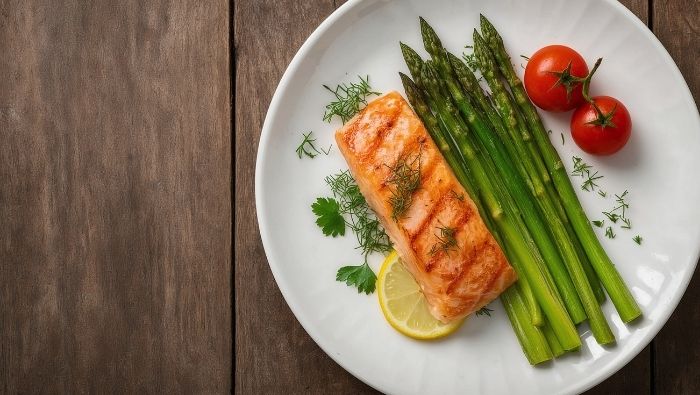
Best breakfast for PCOS Salmon and asparagus plate for insulin resistance
Sharon Carius - Headshot
Sharon Carius
BA Health Science – Clinical Nutrition, BA App. Sc., Adv Dip Nutritional Medicine, Metabolic Balance® Practitioner, Member of Australian Natural Therapies Association (ANTA)

This article was written with clinical input from Sharon Carius, Clinical Nutritionist and certified Metabolic Balance® Practitioner based in Brisbane, Australia. Sharon works with women navigating insulin resistance, PCOS, and perimenopause through her clinic at WNutrition.

Introduction

If you have PCOS or insulin resistance, your first meal of the day is the single most important metabolic lever you have. For many women, breakfast is the exact moment they accidentally set themselves up for a day of "hanger," brain fog, energy crashes, and stubborn weight that won't shift - without ever realising the two are connected.

The most common mistake is what we'll call the "healthy carbohydrate trap": porridge, fruit smoothies, granola, wholegrain toast. These feel virtuous, and they're marketed as healthy - but for an insulin-resistant body, they can trigger a large blood sugar spike that keeps insulin elevated for hours and sets the tone for the entire day.

This guide breaks down why breakfast dictates your day, and why shifting to a savoury, protein-led start is one of the most effective single changes you can make for PCOS and insulin resistance.

Why breakfast dictates your whole day

When you wake, your body is in a fasted state and especially sensitive to what you eat next. If your first meal is high in refined carbohydrates or sugars, your blood sugar rises sharply, and in response your pancreas releases a surge of insulin to bring it back down.

For a woman with insulin resistance, that surge is exaggerated - and the crash that follows arrives faster and drops lower. That crash is what you feel mid-morning: the slump, the sudden hunger, the craving for something sweet or starchy to pick you back up. And so the cycle repeats through the day.

Set that pattern in motion at breakfast and you're chasing it until bedtime. Interrupt it at breakfast, and everything downstream - energy, cravings, focus, even your evening appetite - tends to settle. This is why the first meal matters more than any other, and why fixing it is the highest-leverage change most women can make. The full mechanics of the spike-and-crash are covered in why you feel tired after eating with PCOS.

Insight

The problem with a "healthy" carbohydrate breakfast isn't the calories - it's the timing. Eating fast-releasing carbohydrate at the exact moment your body is most insulin-sensitive produces the biggest spike of the day, and the biggest crash. The same food eaten later, alongside protein and fat, would behave very differently.

The "healthy carbohydrate trap"

Here's what makes this so frustrating: the breakfasts causing the problem are the ones women have been told are good choices.

Porridge, fruit smoothies, granola, wholegrain toast with jam, a banana on the run, a "healthy" muffin - these are marketed as wholesome, and in a different metabolic context they might be fine. But for an insulin-resistant body first thing in the morning, they're largely fast-releasing carbohydrate with little to slow it down. The result is a sharp glucose rise, a matching insulin surge, and a crash an hour or two later that drives the very cravings you're trying to avoid.

The fix isn't to eat less. It's to change what the meal is built around - from carbohydrate to protein.

The savoury start: build breakfast around protein

The single most effective shift is to move from a sweet, carbohydrate-led breakfast to a savoury, protein-led one. Protein produces the smallest blood sugar rise of any macronutrient, keeps you full for hours, and blunts the glucose response of anything you eat alongside it.

How much protein? This is where breakfast and the wider protein question meet: research suggests around 25 to 30 grams of protein at breakfast is the threshold that meaningfully supports stable blood sugar and muscle maintenance - and most typical breakfasts provide a fraction of that. It's worth understanding how much protein a woman actually needs, because breakfast is where most women fall furthest short.

The principles of a metabolically sound breakfast:

  • Lead with protein - eggs, fish, Greek yoghurt, or leftover meat form the base of the meal, not a garnish on top of toast.
  • Add healthy fat - avocado, olive oil, nuts, seeds - to slow digestion further and extend satiety.
  • Include fibre from vegetables rather than fruit - greens, mushrooms, tomatoes, peppers.
  • Keep fast carbohydrate small or absent at this meal specifically, since it's the meal where it does the most damage.

This is the same principle that underpins balancing blood sugar across the whole day - breakfast is simply where it matters most.

TIP

If changing your whole diet feels overwhelming, change only breakfast for two weeks. Swap the toast or smoothie for a savoury, protein-led meal and notice what happens to your mid-morning hunger, your afternoon energy, and your evening cravings. Most women find this one change more noticeable than anything else they try.

Five savoury breakfasts that work

Practical, protein-led, and built for stable blood sugar.

1. Eggs with greens and avocado. Two or three eggs any way you like, a handful of sautéed spinach or mushrooms, and half an avocado. The template savoury start - protein, fat, and fibre in one plate.

2. Smoked salmon and asparagus. Smoked salmon with grilled asparagus and a scattering of pumpkin seeds. Salmon provides omega-3 fatty acids, which are associated with reduced inflammation and improved insulin sensitivity in women with PCOS.

3. Savoury chia pudding. Three tablespoons of chia seeds soaked overnight in unsweetened almond milk, topped with hemp seeds and a pinch of sea salt. Chia is rich in fibre, and keeping it savoury rather than sweet avoids the fructose-driven spike of the usual fruit-topped version.

4. Tofu or tempeh breakfast hash. Firm tofu crumbled and cooked with turmeric, cumin, and chopped peppers. A solid plant-based option - soy foods may support metabolic markers in women with hormonal imbalances, and this delivers protein without animal products.

5. "Dinner for breakfast." Any leftover high-protein meal from the night before - grilled chicken and broccoli, salmon and greens. The fastest savoury start there is, and it sidesteps the "there's nothing quick to eat" problem entirely.

Notice what none of these are: sweet, carbohydrate-led, or eaten on the run with a coffee. That's the whole point.

Why the right breakfast isn't identical for every woman

The savoury-start principle works for almost everyone - but the specific foods that best steady your blood sugar aren't the same as the next woman's.

This is well established in nutrition science. Research tracking how thousands of people respond to identical meals has shown the same breakfast can spike one woman's blood sugar sharply while another tolerates it easily, because individual responses depend on genetics, gut microbiome, hormones, muscle mass, and metabolic state. A breakfast that's perfectly steadying for your friend might be a hidden spike for you.

The principles here are the right place to start. But the most precise results come from knowing your individual responses - which is the foundation of the personalised metabolic and nutrition programmes that identify, from your own biochemistry, exactly which foods keep your blood sugar and insulin calm, starting with the meal that matters most.

Clinical Insight

The first meal of the day exerts disproportionate influence over glycaemic control in women with PCOS and insulin resistance, owing to the heightened insulin sensitivity of the fasted morning state and the tone it sets for subsequent post-prandial responses. A breakfast dominated by rapidly digested carbohydrate provokes an exaggerated glucose excursion and compensatory hyperinsulinaemic response in the insulin-resistant individual, followed by reactive hypoglycaemia that drives mid-morning hunger, carbohydrate craving, and the perpetuation of glycaemic instability across the day.
The evidence-based countermeasure is a protein-forward, savoury meal composition: dietary protein elicits minimal glycaemic and insulinaemic response while conferring superior satiety, and its co-ingestion attenuates the glucose response to any accompanying carbohydrate. A per-meal protein dose in the region of 25–30 g additionally supports muscle protein synthesis - of particular relevance given that skeletal muscle is the principal site of insulin-mediated glucose disposal and is progressively lost with age and hormonal transition. The addition of dietary fat and non-starchy vegetable fibre further slows gastric emptying and flattens the glycaemic curve.
In PCOS specifically, this matters because the cumulative daily insulin load is a principal driver of ovarian androgen production and associated symptomatology, such that lowering the breakfast-initiated insulin surge exerts effects well beyond the meal itself.
Because individual glycaemic responses to specific foods vary substantially between women, generic breakfast prescriptions are consistently outperformed by intervention calibrated to the individual's measured responses - though the savoury, protein-led principle applies near-universally as a starting framework.

Working With Your Breakfast - the Easiest Place to Start?

If your breakfast is the thing setting off your whole day, it's also the easiest thing to fix - and there are two ways forward depending on where you're at.

If you want a structured place to start, the 14-Day Metabolic Kickstart begins exactly here: protein at every meal is its very first principle, and it comes with a collection of savoury, blood-sugar-stabilising breakfasts already built for you. A clinician-designed 14-day reset - real food, 40+ recipes, and Sharon's video modules - for $47. The simplest way to put this article into practice tomorrow morning.

And when you want a plan built entirely around your own biology - including the specific breakfasts that suit your metabolism - my metabolic health programmes begin with a comprehensive analysis of your individual blood chemistry, so your nutrition is matched to your body rather than a general principle.

👉 Start the 14-Day Kickstart ($47) · or book a 1:1 Health Strategy Session

Free resource

Download the 7-Day Metabolic Reset Guide - a free, clinically grounded place to start, built around exactly this principle: steadier blood sugar from the first meal of the day. Protein-led, savoury, and designed specifically for women. No calorie counting. No restriction.

Frequently Asked Questions

What is the best breakfast for PCOS?

A savoury, protein-led breakfast - built around eggs, fish, Greek yoghurt, or leftover meat, with healthy fat and vegetables, and little fast-releasing carbohydrate. This produces the smallest blood sugar rise and keeps insulin lower, which steadies energy and cravings for the rest of the day.

Why is oatmeal or porridge bad for insulin resistance?

It isn't inherently "bad," but eaten alone first thing in the morning - when the body is most insulin-sensitive - porridge is largely fast-releasing carbohydrate that can trigger a sharp glucose spike and crash. Pairing it with substantial protein and fat, or choosing a savoury option instead, produces a much gentler response.

How much protein should I eat at breakfast with PCOS?

Around 25 to 30 grams is the threshold that meaningfully supports stable blood sugar and muscle maintenance. Most typical breakfasts provide far less. Building the meal around a proper protein source is the key change.

Are smoothies good for PCOS?

Fruit-heavy smoothies are a common hidden trap - they deliver a large, fast dose of sugar with little to slow it down, often spiking blood sugar as much as a sugary drink. A savoury, protein-based breakfast is generally a far better choice.

Can I have a sweet breakfast at all with insulin resistance?

Occasionally, and better if it's built on protein and fat rather than carbohydrate alone. But as a daily default, a savoury protein-led breakfast serves an insulin-resistant body far better - particularly because the morning is when a spike does the most damage.

Start free

7-Day Metabolic Reset

A free, clinically grounded guide to begin stabilising blood sugar and supporting your metabolism this week. A gentle first taste of the approach.

Free

Get the free guide
Start here

14-Day Metabolic Kickstart

For when eating well stopped being enough. A clinician-designed 14-day reset — six evidence-based principles, 40+ recipes, and Sharon's video modules to help you better understand your body. Real food, no shakes, no calorie counting. Yours to keep.

$47 — a structured first step

Start your 14 days →
Work 1:1

Health Strategy Session

Ready for a plan built entirely around your own blood chemistry? Work directly with Sharon to map out a fully personalised metabolic approach for your body.

1:1 with Sharon

Book a session

Other Articles...

What to Eat for Menopause Belly Fat

What to Eat for Menopause Belly Fat (and What’s Really Driving It)

If you’re carrying new weight around your middle since menopause and looking for the foods that will shift it, there’s something worth knowing before you start cutting things out: menopause belly fat responds far better to what you build your meals around than to what you take away. The women who make progress with it rarely do so by eating less – they do it by eating differently.

read more...