
Jump to section
Introduction
If you have PCOS and you feel like your body is working against you - that your weight doesn't respond the way it should, that your energy is unreliable, that your symptoms make no sense relative to the effort you are putting in - there is a clinical explanation for that experience.
It is not in your head. It is not a lack of discipline. And it is not simply "hormones."
PCOS - now officially renamed polyendocrine metabolic ovarian syndrome (PMOS) - is, at its core, a metabolic condition - one in which the way your body produces energy, regulates blood sugar, and manages hormonal signalling has become systematically dysregulated. The visible symptoms - the irregular periods, the acne, the hair changes, the weight gain - are the downstream outputs of that deeper metabolic dysfunction. Treating the symptoms without addressing the metabolic root is why so many women with PCOS feel like they are managing but never actually improving.
This guide changes that.
What follows is a comprehensive clinical framework for understanding what PCOS does to your metabolism - the mechanisms, the consequences, the symptoms, and what evidence-based management actually involves. Not a list of tips. Not a reassurance that this is normal. A genuine explanation of what is happening in your body, and what you can do about it.
Understanding is where lasting change begins.
Start Here: Reset Your Metabolism
A structured starting point - download our free 7-day metabolic reset guide.
A simple, clinically-informed plan to help stabilise blood sugar, improve metabolism, and reduce common PCOS symptoms.
What PCOS actually is - beyond the diagnosis
Polycystic Ovary Syndrome is one of the most common endocrine conditions affecting women of reproductive age - with prevalence estimates of 8–13% depending on the diagnostic criteria used.

Despite its name, PCOS is not fundamentally a condition of the ovaries. It is a systemic metabolic and hormonal disorder that happens to express itself most visibly through reproductive symptoms.
The clinical diagnosis is based on the Rotterdam criteria - requiring two of the following three features:
- Irregular or absent menstrual cycles
- Elevated androgens (either on blood testing or through clinical features such as acne, hirsutism, or hair thinning)
- Polycystic-appearing ovaries on ultrasound
What this diagnostic framework does not capture is the underlying metabolic architecture that generates these features in the first place. Two women can meet the same diagnostic criteria through entirely different hormonal and metabolic pathways - which is part of why PCOS presents so differently between individuals, and why generic management approaches so often produce inconsistent results.
For the majority of women with PCOS, the metabolic root involves some combination of:
- Insulin resistance - reduced cellular responsiveness to insulin, requiring the body to produce more insulin to manage blood glucose
- Chronic low-grade inflammation - sustained immune activation that impairs hormonal signalling and amplifies metabolic dysfunction
- HPA axis dysregulation - an altered stress response system that compounds blood sugar instability and drives visceral fat accumulation
- Gut microbiome disruption - dysbiosis that drives systemic inflammation and impairs oestrogen and hormone metabolism
These mechanisms interact and amplify each other - which is why PCOS is so self-sustaining without targeted intervention, and why addressing any single factor in isolation produces limited results.
PCOS is not a reproductive condition that happens to have metabolic consequences. It is a metabolic condition that expresses itself through reproductive symptoms. This reframe changes everything about how it should be managed - shifting the focus from symptom suppression to root cause resolution. When the metabolic environment improves, the symptoms follow.
The central mechanism: Insulin resistance and the PCOS hormonal loop
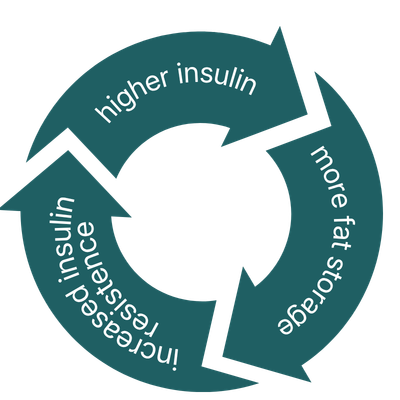
Insulin resistance is the most clinically significant and most consistently present metabolic feature of PCOS - found in approximately 70–80% of women with the condition, including those who are lean.
Understanding how it works - and why it is so central - is the essential foundation for everything else in this guide.
What Insulin Resistance Actually Means
Insulin is the hormone that allows glucose to enter cells from the bloodstream. When cells become resistant to insulin's signal, the body compensates by producing more - maintaining blood glucose control at the cost of chronically elevated insulin levels.
Those chronically elevated insulin levels then drive the hormonal cascade that generates PCOS symptoms:
At the ovary: Elevated insulin directly stimulates the ovarian theca cells to produce more testosterone and androstenedione. Simultaneously, high insulin suppresses SHBG (sex hormone-binding globulin) - the protein that binds and neutralises testosterone in the bloodstream. More androgens being produced, less of them being bound - the result is significantly elevated free androgen activity throughout the body.
At the hypothalamus: Elevated insulin amplifies GnRH pulse frequency, skewing pituitary output toward more LH relative to FSH - disrupting the hormonal sequence required for follicle development and ovulation.
At the liver: High insulin promotes triglyceride synthesis, raises LDL particle number, and reduces HDL - creating the lipid profile associated with elevated cardiovascular risk in PCOS.
At the adrenal gland: Elevated insulin amplifies adrenal androgen production - compounding the ovarian androgen excess.
This is the PCOS hormonal loop: insulin resistance → hyperinsulinaemia → androgen excess → anovulation → more metabolic disruption → worsening insulin resistance.
Breaking this loop is the primary objective of metabolic management in PCOS.
For the full clinical explanation of insulin resistance in PCOS: PCOS and Insulin Resistance: What's Really Driving Your Symptoms
And for the specific consequences of elevated insulin on hormone production: High Insulin and PCOS: Why It Disrupts Hormones
Insulin resistance in PCOS is frequently not tested in routine care - fasting glucose and HbA1c can appear entirely normal while fasting insulin is significantly elevated. If you have not had fasting insulin specifically measured, it is worth requesting. Understanding your insulin status is the most important single piece of information for guiding your PCOS management approach.

The second driver: Chronic low-grade inflammation
Insulin resistance does not operate in isolation. It exists in a mutually reinforcing relationship with chronic low-grade inflammation - the second defining metabolic feature of PCOS.
Chronic low-grade inflammation is not the visible, acute inflammation of an injury or infection. It is a sustained, low-level immune activation that produces no obvious external signs but generates a continuous background of inflammatory signalling that impairs insulin receptor function, stimulates ovarian androgen production, disrupts ovulation, and fragments sleep architecture.
Women with PCOS demonstrate consistently elevated inflammatory markers - CRP, IL-6, TNF-α - even in lean, active women whose lifestyle would not predict elevated inflammation. This confirms that inflammation in PCOS is intrinsic to the condition, not simply a consequence of weight or dietary pattern.
The inflammatory drivers most relevant to PCOS include:
- Chronically elevated insulin (hyperinsulinaemia directly stimulates cytokine production)
- Visceral adipose tissue (metabolically active fat that continuously releases inflammatory mediators)
- Gut dysbiosis (leaky gut allowing bacterial LPS to enter systemic circulation and trigger immune activation)
- Blood sugar spikes (each high-glycaemic meal produces a post-prandial inflammatory response)
- Poor sleep and elevated cortisol (both independently drive inflammatory cytokine production)
The inflammatory feedback loop in PCOS is self-sustaining: inflammation worsens insulin resistance, which drives more androgen production, which amplifies the inflammatory environment.
For the complete clinical explanation: PCOS and Inflammation: The Hidden Driver Behind Your Symptoms

The third driver: Cortisol and HPA axis dysregulation
The stress response system - the hypothalamic-pituitary-adrenal (HPA) axis - is measurably dysregulated in women with PCOS, and its consequences for metabolism are substantial and often completely overlooked in standard PCOS management. Cortisol - the primary stress hormone - raises blood glucose through hepatic gluconeogenesis, promotes visceral fat accumulation, suppresses thyroid hormone conversion, amplifies inflammatory signalling, and disrupts the hormonal axis governing ovulation. In women with PCOS, cortisol responses are more reactive, take longer to return to baseline, and are often elevated in the afternoon and evening when they should be declining. The practical consequences of this dysregulation are familiar to most women with PCOS:
- Unexplained blood sugar instability independent of food intake
- Energy crashes in the mid-morning and mid-afternoon
- Wired-but-tired exhaustion at night
- Persistent abdominal weight gain despite dietary management
- Worsening of all PCOS symptoms during stressful periods
Cortisol dysregulation in PCOS is not simply about being stressed. It is a physiological feature of the condition - part of the same neuroendocrine disruption that drives insulin resistance and hormonal imbalance. Addressing it is a clinical priority, not a lifestyle recommendation. Full detail: Cortisol and PCOS: The Stress–Blood Sugar Connection

The fourth driver: Sleep disruption
Sleep is one of the most powerful metabolic regulators available - and in PCOS, it is consistently disrupted at rates far exceeding the general population.
Women with PCOS have significantly higher rates of obstructive sleep apnoea (up to 30 times the background prevalence), altered sleep architecture driven by elevated androgens, nocturnal blood glucose instability causing early waking, and elevated evening cortisol suppressing melatonin and delaying sleep onset.
Even one night of poor sleep measurably reduces insulin sensitivity, raises cortisol, disrupts the appetite hormones ghrelin and leptin, and elevates inflammatory markers. For women with PCOS who are already metabolically vulnerable, the compounding effect of chronic sleep disruption on insulin resistance and hormonal balance is clinically significant - and is one of the most common reasons women with PCOS who are managing their diet carefully are still not seeing the results they expect.
Sleep is not a lifestyle preference in PCOS. It is a primary metabolic variable.
Full detail: PCOS and Sleep: Why Poor Sleep Worsens Insulin Resistance

The fifth driver: Gut microbiome disruption
The gut microbiome - the complex community of microorganisms living in the digestive tract - directly influences insulin sensitivity, systemic inflammation, oestrogen metabolism, and neurological function. Women with PCOS consistently demonstrate measurably altered microbiome composition compared to women without the condition: reduced microbial diversity, depleted beneficial species, and elevated markers of intestinal permeability.
When the gut barrier becomes compromised, bacterial fragments enter systemic circulation and trigger a significant inflammatory cascade - activating the same pro-inflammatory cytokines that impair insulin signalling and stimulate androgen production. This gut-driven inflammation is one of the mechanisms by which dietary pattern, stress, and sleep all feed back into PCOS symptom severity.
The gut microbiome also houses the estrobolome - the community of bacteria responsible for oestrogen metabolism. Dysbiosis disrupts this pathway, contributing to the hormonal imbalances that characterise PCOS beyond androgen excess alone.
Full detail: PCOS and Gut Health: How Your Microbiome Affects Your Hormones and Metabolism
How metabolic dysfunction drives PCOS symptoms
Understanding the core metabolic drivers makes the symptom picture of PCOS coherent in a way it often is not when symptoms are addressed individually. Every major PCOS symptom is a downstream output of the metabolic mechanisms described above.
Weight gain and difficulty losing weight
PCOS-related weight gain is not a simple energy balance problem. Chronically elevated insulin actively promotes fat storage - particularly in visceral and abdominal tissue - while simultaneously impairing fat breakdown. Cortisol adds to visceral fat accumulation. Elevated androgens alter fat distribution. Leptin resistance blunts satiety signalling.
This is why standard caloric restriction so often fails women with PCOS - it addresses the energy equation without addressing the hormonal environment that is directing energy into storage regardless of intake.
Why PCOS Causes Weight Gain (and What's Actually Happening)
Why You're Not Losing Weight with PCOS (Even When Doing Everything Right)
Fatigue and energy crashes
The persistent fatigue of PCOS is metabolic in origin - driven by blood sugar instability, mitochondrial inefficiency from insulin resistance, HPA axis dysregulation producing the characteristic wired-but-tired exhaustion, and the energetic burden of chronic inflammation. Post-meal fatigue is one of the most specific and useful signals of active metabolic dysfunction.
Why You Feel Tired After Eating with PCOS
Sugar cravings and appetite dysregulation
PCOS cravings are not a character flaw. They are the physiological consequence of blood sugar instability, cortisol-driven glucose cycling, impaired leptin signalling, and the dopamine and serotonin disruption that accompanies chronic metabolic stress. Understanding the mechanism changes how you approach them.
PCOS Cravings: Why You Crave Sugar and Carbs (and How to Stop)
Irregular periods and anovulation
The menstrual cycle disruption of PCOS is a direct hormonal consequence of insulin resistance - through the LH/FSH dysregulation and androgen excess that insulin drives. Anovulatory cycles mean absent progesterone, with downstream consequences for mood, sleep, anxiety, and long-term endometrial health. Cycle regularity is one of the most meaningful markers of metabolic improvement in PCOS.
PCOS and Irregular Periods: What Your Cycle Is Really Telling You
Acne
PCOS acne is not a skin condition. It is a metabolic and hormonal condition that expresses itself on the skin - driven by the insulin–IGF-1–androgen pathway that overstimulates sebaceous glands. Topical treatments manage the surface while the hormonal driver continues operating underneath. Addressing insulin resistance is the most upstream intervention for PCOS acne.
PCOS and Acne: Why It Keeps Coming Back (and What Actually Helps)
Hair loss
Androgenic alopecia in PCOS is driven by elevated free testosterone and DHT - both consequences of insulin resistance suppressing SHBG while driving ovarian androgen production. The same metabolic approach that improves insulin sensitivity raises SHBG, reduces free androgen availability, and modifies the hormonal environment in which follicular miniaturisation progresses.
PCOS and Hair Loss: Why It Happens and How to Slow It Down
Bloating and digestive symptoms
The gut dysbiosis and increased intestinal permeability characteristic of PCOS produce digestive symptoms - bloating, irregular bowel habits, food sensitivities - that are part of the same metabolic picture rather than separate conditions. Cortisol dysregulation slows gut motility and alters the gut immune environment, compounding the dysbiosis-driven symptoms.
PCOS Bloating: Causes and What Actually Helps
Anxiety and mood changes
Anxiety in PCOS has multiple physiological drivers: blood sugar instability generating adrenal responses that mimic anxiety, HPA axis dysregulation maintaining chronic sympathetic nervous system activation, neuroinflammation impairing prefrontal cortical function, and progesterone deficiency reducing GABA-mediated anxiety buffering. These are metabolic mechanisms, not psychological ones - and they respond to metabolic intervention.
PCOS and Anxiety: The Hormonal Connection Most Women Don't Know About
Conditions that commonly co-exist with PCOS
PCOS does not exist in isolation. Two conditions co-occur at significantly elevated rates and compound the metabolic picture in specific and clinically important ways.
Thyroid Dysfunction
Hashimoto's thyroiditis and hypothyroidism are two to three times more prevalent in women with PCOS than in the general population - driven by the shared inflammatory and autoimmune terrain. Hypothyroidism independently worsens insulin resistance, reduces SHBG, impairs T4-to-T3 conversion, and produces a symptom profile that overlaps substantially with PCOS. A woman who remains significantly symptomatic despite managing her PCOS warrants comprehensive thyroid investigation.
PCOS and Thyroid: Why These Two Conditions So Often Go Together
Perimenopause
For women in their late 30s and 40s, PCOS increasingly overlaps with the perimenopausal transition - with declining oestrogen directly worsening insulin resistance, compounding the metabolic picture, and producing new symptoms that sit alongside and interact with the established PCOS picture. This intersection is one of the most clinically underserved areas in women's metabolic health.
What comprehensive metabolic testing should include
Standard PCOS investigation frequently leaves the most important metabolic markers untested. A comprehensive metabolic panel for PCOS should include:
Hormonal markers:
Fasting insulin (the most important single marker - frequently omitted from standard panels), fasting glucose, HbA1c, free and total testosterone, SHBG, DHEAS, LH, FSH, oestradiol, progesterone (day 21 if cycling)
Thyroid:
TSH, free T4, free T3, thyroid peroxidase antibodies (TPO-Ab), thyroglobulin antibodies (TgAb) - not TSH alone
Inflammatory markers:
High-sensitivity CRP (specifically hs-CRP - standard CRP misses low-grade inflammation), full blood count with differential
Nutritional status:
Vitamin D (25-OH), ferritin (not just haemoglobin), zinc, magnesium (red blood cell magnesium where available)
Metabolic markers:
Metabolic markers: Fasting lipid panel (triglycerides, HDL, LDL particle size), liver function tests, blood pressure
This panel provides the clinical picture required to understand what is actually driving your specific presentation - and to build a management approach targeted to your individual metabolic profile rather than a generic PCOS protocol.
For guidance on interpreting the insulin resistance markers specifically: Signs of "Silent" Insulin Resistance in Women: The Comprehensive Guide
Evidence-based PCOS management: what actually works.
Managing PCOS metabolically requires a systematic approach across the core drivers simultaneously. Here is the clinical framework.
Important Dietary Shift
Nutrition: blood sugar stability as the foundation
The most important dietary shift in PCOS is from a pattern that drives blood sugar volatility to one that supports stable blood glucose throughout the day. This is not about caloric restriction - it is about the hormonal environment that your dietary pattern creates.
30%
Lower post-meal glucose response
Achieved by eating vegetables and protein before the carbohydrate portion of your meal - a technique known as meal sequencing.
In practice - five evidence-based shifts
Go Deeper - Related Guides
Best diet for PCOS and insulin resistance →
Backed by science
The savoury start protocol →
Best breakfast for PCOS and insulin resistance
7-Day PCOS meal plan →
Insulin resistance focus
How to balance blood sugar with PCOS →
Practical guide
Get Moving
Exercise: metabolic and hormonal, not just caloric
Exercise in PCOS is most accurately understood as a metabolic and hormonal intervention - not a calorie-burning tool. The type and volume of exercise matters significantly when insulin resistance and cortisol dysregulation are part of the picture.
In practice - three important shifts
Go Deeper - Related Guides
PCOS and exercise →
What type, how much, and why more isn't better
Supplement if needed
Targeted supplementation
Several supplements have specific clinical evidence for addressing the core metabolic mechanisms of PCOS:
In practice - something to consider
Tier One - strong evidence
Inositol (myo-inositol and D-chiro-inositol 40:1), magnesium glycinate, omega-3 fatty acids (EPA + DHA), vitamin D (where deficient)
Tier Two - good evidence, context-dependent
NAC, berberine, zinc, iron (where ferritin is low)
Tier Three - emerging or supporting evidence
Spearmint tea, alpha-lipoic acid, ashwagandha, targeted probiotics
Go Deeper - Related Guides
PCOS and supplements →
What the evidence actually says
Rest is critical
Sleep and cortisol management
Given that poor sleep and cortisol dysregulation independently maintain insulin resistance, drive visceral fat accumulation, and amplify inflammatory load, addressing both is a direct metabolic intervention - not a supplementary wellness practice.
In practice - areas to focus
Each of these produce measurable metabolic benefits in PCOS.
Go Deeper - Related Guides
PCOS and sleep →
Why poor sleep worsens insulin resistance
Cortisol and PCOS →
The stress–blood sugar connection
Power of the Gut
Gut health support
Supporting gut microbiome diversity - through dietary fibre variety, fermented foods, and targeted probiotic strains - is both anti-inflammatory and directly insulin-sensitising through SCFA production and gut barrier integrity. The 30 plants per week target is the most accessible and evidence-backed starting point.
Go Deeper - Related Guides
PCOS and gut health
How your microbiome affects your hormones and metabolism
Need Personalised Guidance?
Your PCOS isn't generic - your plan shouldn't be either.
Book a free 15-min clarity call or a Health Strategy Session with a clinical nutritionist.

Can you improve PCOS by
fixing your metabolism?
This is where many women start to see a meaningful shift.
While PCOS is a complex condition, addressing metabolic health - particularly insulin resistance - can have a significant impact on symptoms.
In clinical settings, improving metabolic function is often associated with:
- More regular menstrual cycles
- Reduced cravings and improved energy
- Easier weight management
- Improvements in skin and hormonal symptoms
It’s important to note that this is not about a quick fix or a one-size-fits-all solution.
However, for many women, targeting the metabolic drivers of PCOS creates a much more effective and sustainable path forward than focusing on symptoms alone.
The signs your metabolic approach is working
Because the goal is metabolic and hormonal rather than purely aesthetic, the markers of meaningful progress are broader than the scale.
Look for:
- Cycles gradually becoming more regular - one of the most meaningful indicators of improving insulin sensitivity and hormonal balance
- Reduced cravings - particularly for sugar and refined carbohydrates in the afternoon
- More stable energy throughout the day - fewer crashes and less reliance on caffeine or sugar for energy management
- Improved sleep quality - falling asleep more easily, fewer night wakings, waking more rested
- Skin improvements - reduction in active acne lesions over two to three months
- Reduced bloating and improved digestive comfort
- Improved mood stability and reduced anxiety
- Gradual body composition changes - clothes fitting differently even when the scale is slow to move
- Measurable improvements in fasting insulin, hs-CRP, testosterone, and SHBG on retesting at three to six months
Progress in PCOS is cumulative and operates on a hormonal timescale - meaningful change typically becomes apparent over two to four months of consistent effort. This is not slow. It is the biology of hormonal recalibration.
Retest your key metabolic markers - fasting insulin, hs-CRP, free testosterone, SHBG, and vitamin D - at three to six months after beginning a targeted metabolic approach. These numbers tell you what the scale cannot: whether your internal hormonal and metabolic environment is actually shifting. Objective data is motivating in a way that subjective symptom tracking alone cannot be.
Continue reading: The PCOS metabolic health ecosystem
This guide provides the clinical framework. The articles below go deeper on each mechanism, symptom, and solution - building the complete picture of PCOS as a metabolic condition that can be genuinely addressed.
Core Mechanisms
- PCOS and Insulin Resistance: What's Really Driving Your Symptoms
- High Insulin and PCOS: Why It Disrupts Hormones
- Cortisol and PCOS: The Stress–Blood Sugar Connection
- PCOS and Sleep: Why Poor Sleep Worsens Insulin Resistance
- PCOS and Inflammation: The Hidden Driver Behind Your Symptoms
- PCOS and Gut Health: How Your Microbiome Affects Your Hormones
Understanding Your Symptoms
- Signs of Silent Insulin Resistance in Women
- Why PCOS Causes Weight Gain (and What's Actually Happening)
- Why You're Not Losing Weight with PCOS
- Why You Feel Tired After Eating with PCOS
- PCOS Cravings: Why You Crave Sugar and Carbs
- PCOS Bloating: Causes and What Actually Helps
- PCOS and Irregular Periods: What Your Cycle Is Really Telling You
- PCOS and Acne: Why It Keeps Coming Back
- PCOS and Hair Loss: Why It Happens and How to Slow It Down
- PCOS and Anxiety: The Hormonal Connection
Evidence-Based Solutions
- Best Diet for PCOS and Insulin Resistance
- Best Breakfast for PCOS and Insulin Resistance
- 7-Day PCOS Insulin Resistance Meal Plan
- How to Balance Blood Sugar with PCOS
- PCOS and Exercise: What Type, How Much, and Why More Isn't Better
- PCOS Supplements: What the Evidence Actually Says
Specialist Topics
Clinical Insight
The metabolic model of PCOS - in which insulin resistance, chronic low-grade inflammation, HPA axis dysregulation, and gut microbiome disruption interact to generate and sustain the hormonal features of the condition - is now well-established in the clinical and research literature.
Studies consistently demonstrate that improving metabolic function in PCOS produces measurable improvements in ovulation rates, androgen levels, inflammatory markers, and symptom burden - independent of weight loss - confirming that it is the hormonal environment, not body weight per se, that is the primary determinant of clinical outcomes.
A management approach that targets these metabolic drivers systematically - rather than managing symptoms individually - is both the most evidence-aligned and the most clinically effective path available for women with PCOS.
If your current PCOS management does not include comprehensive metabolic assessment and targeted metabolic intervention, it is addressing the condition with an incomplete model.
When to Seek Clinical Support
Many women can make meaningful progress with the right foundational changes - and the resources throughout this guide provide the framework to begin. There are times, however, when personalised clinical support produces outcomes that self-directed management cannot.
Consider working with a clinician who understands the metabolic side of PCOS if:
- Your symptoms are persistent or worsening despite genuine dietary and lifestyle effort
- Your testing shows significantly elevated fasting insulin, high inflammatory markers, or substantially abnormal hormone levels
- You suspect thyroid dysfunction is compounding your PCOS picture
- You are in your 40s and navigating the PCOS–perimenopause overlap
- You want a personalised, structured protocol built around your individual metabolic profile rather than a generic approach
- You are preparing for conception and want to optimise your metabolic health preconceptually
Ready to address the root cause of your PCOS?
In my clinical practice, I specialise in the clinical assessment and management of metabolic dysfunction in women with PCOS - working with the insulin resistance, inflammatory load, cortisol dysregulation, and hormonal imbalance that drive symptoms at their source.
Our flagship programme is Metabolic Balance® - an individually prescribed nutrition protocol built around your specific blood chemistry, designed to recalibrate insulin sensitivity, reduce inflammatory load, and restore hormonal balance from the inside.
Unlike generic dietary plans or symptom-focused management, Metabolic Balance addresses the metabolic environment that is generating your PCOS symptoms - producing changes that are durable because they work at the hormonal root rather than the symptomatic surface.
Metabolic Balance has been used clinically for over 25 years, across more than 30 countries, with a growing evidence base and a track record of meaningful outcomes for women with PCOS and insulin resistance.
Women working through the programme consistently report improvements across the full symptom picture - cycle regularity, energy, skin, body composition, mood, and metabolic markers - as the hormonal environment progressively shifts.
In-clinic and remote consultations available. If you are ready to stop managing symptoms and start addressing the cause, we would love to work with you.
Start Improving Your Metabolic Health Today
Not ready for a full programme yet? Start with the reset.
The 7-Day Metabolic Reset is a free, clinically grounded guide designed specifically for women with PCOS and insulin resistance. It covers blood sugar stabilisation, anti-inflammatory nutrition principles, cortisol support, and practical daily strategies - all structured as a coherent seven-day framework.
Inside, you will find:
- How to structure your meals for stable blood sugar and reduced insulin demand
- The key dietary drivers of PCOS symptoms - and how to address them
- Practical steps you can begin immediately, without overhauling everything at once
Clinically grounded. No gimmicks. A genuine starting point for working with your biology rather than against it.