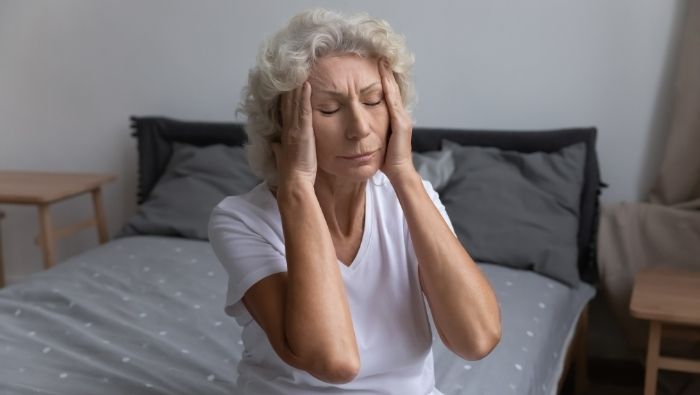
If your body simply feels different in your 40s than it did a decade ago – achier, more reactive, slower to recover, more inflamed in ways you cannot quite articulate – there is a specific clinical reason, and it is one that almost no one talks about openly.
Chronic low-grade inflammation rises significantly in perimenopause.

Category
Perimenopause Metabolism
Perimenopause and Brain Fog: The Cognitive Changes Explained
Introduction If you have started forgetting words mid-sentence, walking into rooms and forgetting...
The Best Diet for Perimenopause and Metabolic Health
If you are looking for a clear, practical answer to what you should actually be eating in perimenopause – without another restrictive plan, another set of foods to avoid forever, or another diet that worked for someone else and is supposed to work for you – this is the article that will give you the framework. Because here is the honest truth: there is no single perfect perimenopause diet.
Perimenopause and Anxiety: The Hormonal Connection Most Women Don’t Know About
If anxiety has appeared in your 40s – or significantly intensified after years of being relatively manageable – and you cannot point to anything in your life that fully explains it, you are not alone, and you are not imagining it. This is one of the most common and most distressing experiences of perimenopause.
Perimenopause and Cortisol: Why Stress Hits Harder in Your 40s
If you have noticed that stress hits you harder than it used to – that small things tip you over more easily, that you feel less resilient, that the recovery from a difficult day takes longer than it should – you are not imagining it. This is one of the most common experiences of perimenopause, and one of the least adequately explained.
Perimenopause Symptoms: The Complete Guide to What’s Normal and What Needs Attention
Perimenopause produces one of the broadest symptom profiles of any hormonal transition – affecting sleep, mood, cognition, metabolism, skin, joints, digestion, and sexual health, often simultaneously. This breadth is part of why it is so frequently missed or misattributed.
Perimenopause and Sleep: Why You Can’t Sleep and What Actually Helps
If your sleep has changed in your 40s – if you are lying awake when you never used to, waking at 3am for no obvious reason, drenched in sweat at 2am, or simply not feeling rested no matter how many hours you spend in bed – this is one of the most important articles you will read.
Perimenopause and Weight Gain: What’s Actually Happening
If you are in your 40s and your body has started changing in ways that feel completely disconnected from what you are eating or how much you are exercising – you are not alone, and you are not imagining it.
Perimenopause and Insulin Resistance: Why Your Blood Sugar Changes in Your 40s
You are eating the way you always have. Your exercise habits have not dramatically changed. And yet your body is responding differently – weight is accumulating around your middle in a way it never did before, your energy is less reliable, and the afternoon slump that used to be manageable now feels genuinely disruptive.
What Is Perimenopause? Symptoms, Timeline, and What to Expect
For many women, perimenopause does not announce itself clearly. It creeps in quietly – a sleep pattern that shifts, a mood that feels harder to manage, a waistline that stops responding the way it used to, periods that become unpredictable after years of reliability.